
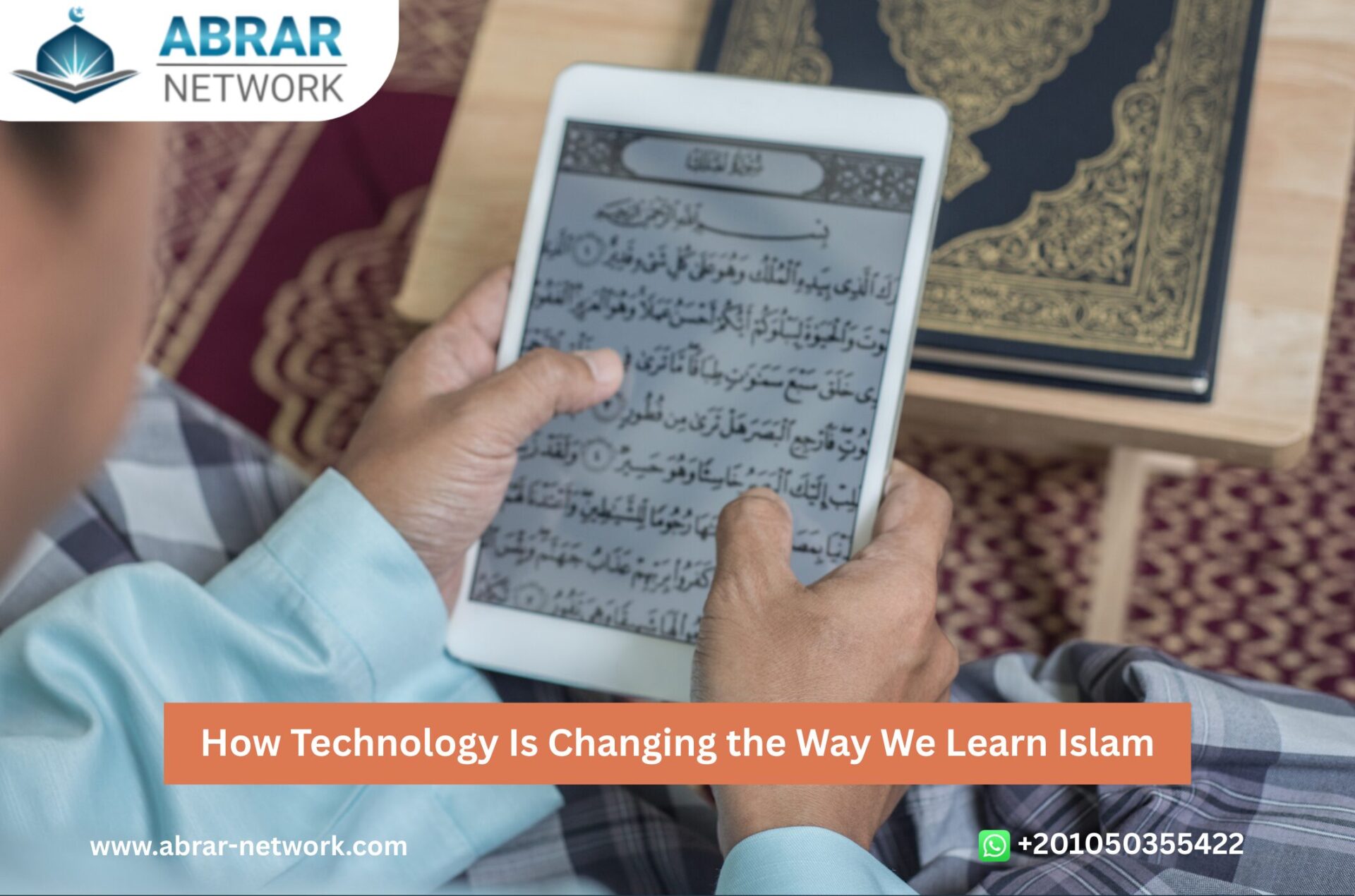
Did you know that technology is changing the way we learn Islam? These days, it is doing a wonderful job in making it easier for us to access authentic Islamic knowledge from reliable sources without effort or hardship
The study of Islamic sciences has moved from mosques to mobile devices, allowing parents to enroll their children in classes from anywhere.
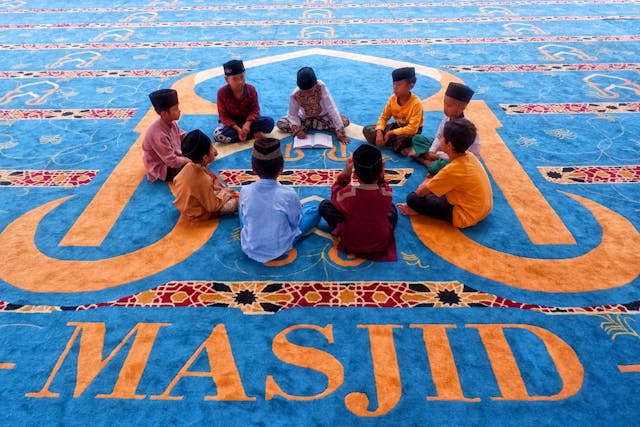
What was the way of Learning Islam in the past?
Among the primary methods of dawah employed by the Companions and Followers, may Allah be pleased with them, were the teaching circles (ḥalaqāt) held in mosques throughout the Islamic world.
These daily study gatherings spread authentic Islamic knowledge and became centers of learning in cities such as Makkah, Madinah, Kufa, Basra, Damascus, and Egypt.
Notable scholars like Ibn ‘Abbās, Ibn Mas‘ūd, Abū al-Dardā’, Abū Mūsā al-Ash‘arī, al-Ḥasan al-Baṣrī, and others dedicated their lives to teaching the Quran and Sunnah, training students with wisdom, patience, and sincerity.
Their teaching method focused on understanding, practice, and moral development, not just memorization.
They taught that knowledge must shape one’s behavior and warned against sins that could darken the heart or block true understanding.
What are the changes that have occurred in the way Islam is learned?
In the past
learning was based on memorization and direct instruction. Muslims would gather in mosques to study Islamic sciences, learn Quranic interpretation, and memorize the Quran.
These days
Technology is changing the way we Learn Islam. learn is done through technology using apps, websites, and social media platforms.
When did the connection between technology and learning Islam begin?
The connection between technology and learning Islam began as soon as modern digital tools emerged. As the number of Muslims continues to grow, many people seek proper guidance to understand their religion and distinguish right from wrong. This growing need led to the creation of Islamic apps and websites, which help bridge the gap and provide reliable religious knowledge. In this way, technology is changing the way we learn Islam.

What technologies are used to learn Islam?
Online lessons:
Classes for Quran memorization and recitation, as well as Islamic studies such as creed Aqeedah, Fiqh, Seerah, and Quran Tafseer.
Apps:
for memorization, supplications, and prayer reminders. These help with memorization, organizing study schedules, and setting reminders for prayers and fasting.
Dawah videos on social media:
Participation of scholars and imams in creating religious content on social platforms is one of the ways technology is changing how people learn Islam.
E-books:
E-books are one of the ways Technology is changing the way we learn Islam. Many books that are now hard to find in print due to unavailability or high cost can be easily accessed digitally, such as Tafsir Al-Qurtubi, Sahih Al-Bukhari, Sahih Muslim, and classical works like Al-Bidayah wa Nihayah by Ibn Kathir.
How is technology changing the way we learn Islam?
- Making it easier to find information.
- Saving old Islamic manuscripts from being lost.
- Helping teachers make lessons more fun and varied.
- Encouraging young people to learn more about Islam.
Why should we use technology to understand Islam?
Simplifying Information
Modern technology is changing the way we learn Islam and helps simplify Islamic knowledge, making it easier for learners to understand.
It allows explanations to be delivered by the most skilled and specialized teachers from different parts of the world. That’s why technology is changing the way we learn Islam.
Clarifying through
Images
Images can be used to make information clearer and more relatable, such as illustrating Islamic measurements, the clothing of Ihram, and other practical examples.
Videos
Videos help explain topics in detail and highlight common mistakes to avoid, for example, how to perform wudu, prayer, or the correct way to sit during the final tashahhud.
It brings knowledge closer to the learner
Allowing them to access it anytime and anywhere with flexibility, without being restricted by fixed schedules
They can listen to or watch lessons in Shariah or Fiqh at any time and place, even using earphones while on the go.

Who is the target audience for learning Islam through technology?
Children of all ages:
especially in their foundational years, where technology can play a supportive role in learning.
Working mothers and homemakers:
who may not have enough time to attend mosque lessons, and therefore turn to technology to learn about their faith from home.
Fathers:
Even though attending mosques is preferred for men, busy work schedules can prevent them from doing so, making technology a practical alternative for learning Islam.
Teachers and Imams:
Because technology is changing the way we learn Islam, now Imams can also benefit by improving their religious knowledge and joining lessons online to connect with scholars and preachers from across the Islamic world.
What are the results of learning Islam through technology?
Technology is transforming the way we learn about Islam, bringing a positive change that benefits the new generations and keeps pace with the world’s continuous development.
Some of the key results include
The spread of Islamic teachings among youth
Religious knowledge has become easily accessible through smart devices, eliminating the need to travel or relocate to find authentic sources.
Faster response to misconceptions
It’s now easier and quicker to verify information or detect false claims by simply searching online to confirm the truth of any content.
Access to religious rulings, Fatwas
If a Muslim faces confusion about a certain issue, they can easily search the internet to learn what is obligatory, permissible, forbidden, or disliked according to Islamic teachings.
Growth in research and reasoning, Ijtihad and Qiyas
As the number of Muslims seeking answers to various questions increases, there is a growing need for scholarly effort and reasoning to provide rulings that fit each situation’s context.
concltion
Technology is changing the way we learn Islam. It has made it easier to access religious teachings and allowed new generations to connect with Islamic heritage and stories that shape their thoughts and behavior, bringing them closer to their faith and protecting them from deviation.